Connect with us

Politics Today

ADC Coalition Abuja 2027 Unveiling: A New Political Era

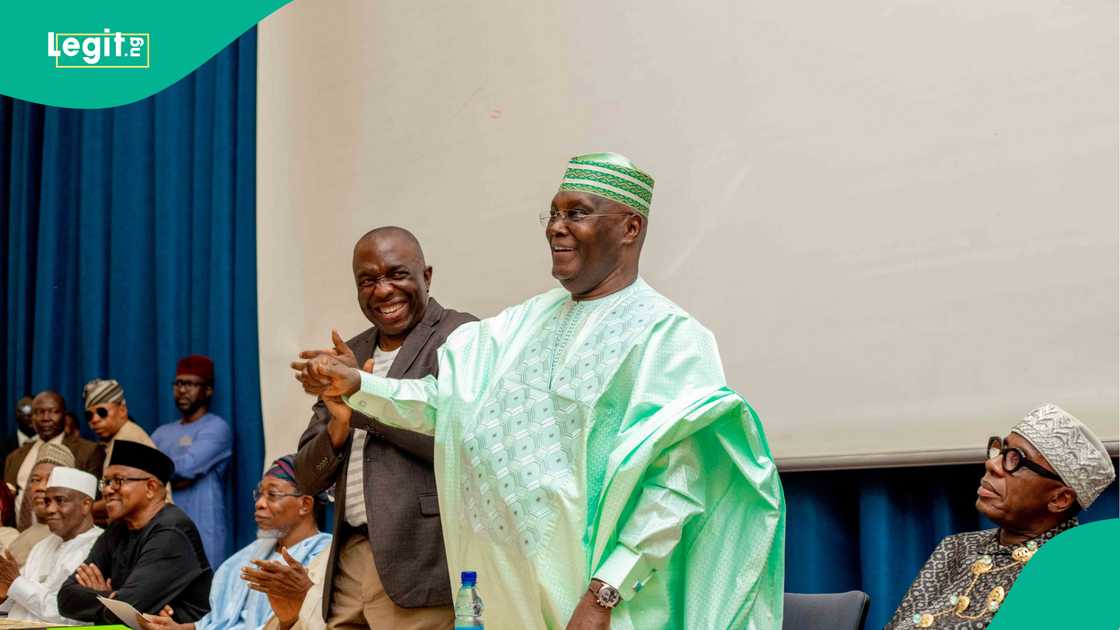
In a powerful display of unity, Atiku, Obi, El Rufai, and other key leaders converged on Abuja to unveil the ADC coalition for 2027, signaling a new chapter in Nigeria’s political landscape.

Published

on

Group of people at a public meeting.

In a move signaling a potential reshaping of Nigeria’s political landscape ahead of the 2027 elections, key figures like Atiku Abubakar, Peter Obi, Nasir El Rufai, and other prominent leaders recently converged on Abuja for the high-profile unveiling of the ADC coalition. This unprecedented alliance, bringing together diverse political voices under a single banner, has captured national attention, sparking curiosity and speculation about its implications for the future of Nigerian politics. As the capital buzzes with anticipation, the ADC coalition’s emergence invites a closer look at what this collaboration means for the upcoming electoral season and the evolving dynamics of power and policy in the country.

Atiku, Obi, El Rufai, and Allies Converge in Abuja for Historic ADC Coalition Launch Unpacking the Strategic Significance of the Coalition for Nigeria’s 2027 Elections Collaborative Dynamics and Policy Alignments Shaping the Future Political Landscape Recommendations for Sustaining Unity and Maximizing Impact Beyond the Coalition Unveiling

The convergence of key political figures such as Atiku Abubakar, Peter Obi, and Nasir El Rufai in Abuja to launch the ADC coalition marks a pivotal moment in Nigeria’s journey toward the 2027 elections. This alliance is not just a political statement but a strategic blend of diverse visions and governance philosophies, promising to reshape the electoral dynamics and policy frameworks of the nation. Collaborative efforts within the coalition focus on:

  • Harmonizing policy goals with a shared commitment to transparency, economic revitalization, and social inclusion.
  • Pooling resources and grassroots support to create a unified front capable of challenging established political orders.
  • Leveraging each member’s unique regional influence to build a truly national framework for sustainable development.

To ensure this coalition’s longevity and effectiveness beyond the initial unveiling, continuous engagement strategies, conflict resolution mechanisms, and adaptive policy reforms must be prioritized. The table below outlines key areas where collaboration can be optimized to sustain the coalition’s impact:

Focus Area Action Points Expected Outcome
Policy Alignment Regular joint forums and policy workshops Coherent, unified legislative agenda
Public Engagement Co-branded outreach programs across regions Broadened support base and voter mobilization
Conflict Resolution Independent coalition mediation committee Minimized internal friction and strengthened unity

By nurturing these collaborative dynamics and institutionalizing strategic alignments, the coalition stands to be a transformative force in Nigeria’s political landscape, paving the way for meaningful change and greater democratic participation in 2027 and beyond.

As the dust settles on a day marked by political fervor and strategic alliances, Abuja stands at the crossroads of a new chapter in Nigeria’s democratic journey. The unveiling of the ADC coalition, graced by figures like Atiku, Obi, and El Rufai, signals not just a meeting of minds but the forging of a collective vision. Whether this coalition will redefine the nation’s political landscape remains to be seen, but one thing is clear: 2027 is shaping up to be a year where old rivalries give way to fresh possibilities, and the pulse of Nigerian democracy beats with renewed energy and anticipation.

Continue Reading
Click to comment

Leave a Reply

Your email address will not be published. Required fields are marked *

Politics Today

NGX Equities Plunge: Investors Suffer Massive N781bn Loss in Just Five Hours

Published

on

NGX: Equities market dips further as investors lose N781bn in five hours

The Nigerian stock market experienced a significant downturn on Thursday, with investors collectively losing N781 billion by the end of trading.

This decline was primarily driven by falling share prices in companies such as University Press Plc, International Energy Insurance, and Thomas Wyatt Plc, among others.

The All-Share Index (ASI), a key market indicator, fell sharply to 140,332.44 points from the previous day’s 141,566.30 points.

Following five hours of active trading, the total market capitalization shrank to N88.783 trillion, down from N89.564 trillion recorded on Wednesday.

Market sentiment was predominantly bearish, with 51 stocks declining, 18 gaining, and 87 remaining flat across 25,891 transactions.

Top Gainers and Losers in Thursday’s Trading

Among the stocks that posted gains, Skye Shelter Fund Plc led with a 9.99% increase, closing at N274.15 per share, up from N249.25. Jaiz Bank Plc and Secure Electronic Technology followed closely, rising by 9.75% and 9.38% respectively, ending the day at N4.39 and N1.05 per share.

Conversely, University Press Plc, International Energy Insurance, and Thomas Wyatt Plc were the most notable decliners, each dropping by 10%. Their shares closed at N6.30, N3.24, and N3.33 respectively, down from N7.00, N3.60, and N3.70.

Trading Volume and Value Highlights

Fidelity Bank Plc dominated the volume index, trading 96 million shares across 556 deals. Veritas Kapital Assurance Plc followed with 36 million shares in 404 transactions, while Universal Insurance Plc moved 32 million shares in 424 deals.

In terms of value, Fidelity Bank Plc led with stock trades worth N1.9 billion. MTN Nigeria (MTNN) came next, with equities valued at N1.1 billion exchanged in 1,055 deals. Stanbic IBTC Plc also featured prominently, trading shares worth N1 billion in 238 deals.

Market Outlook and Investor Sentiment

The persistent bearish trend reflects growing investor caution amid economic uncertainties and sector-specific challenges. This downturn aligns with recent global market volatilities, where emerging markets have faced pressure due to inflation concerns and fluctuating commodity prices.

For instance, similar patterns have been observed in other African markets, such as the Johannesburg Stock Exchange, which recently reported a 2% decline amid tightening monetary policies worldwide.

Investors are advised to monitor corporate earnings reports and macroeconomic indicators closely, as these will likely influence market direction in the coming weeks.

By Babajide Okeowo

Source: Latest Nigeria News | Top Stories from Ripples Nigeria

Continue Reading

Politics Today

Gov Oyebanji Urges Ekiti Residents to Stand United, Cautions Against Criticizing Tinubu
Published

on

Gov Oyebanji warns Ekiti people against criticising Tinubu
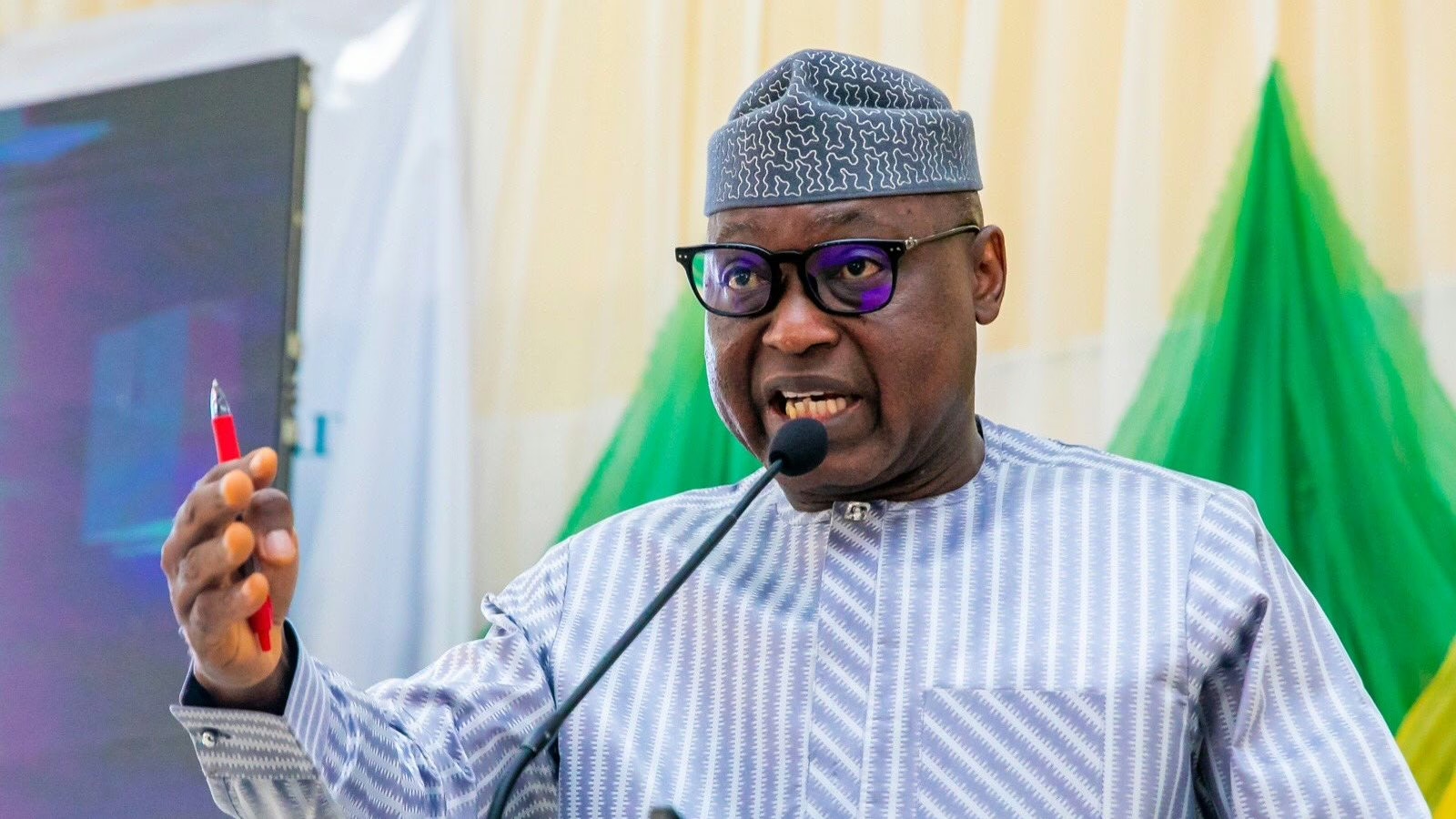
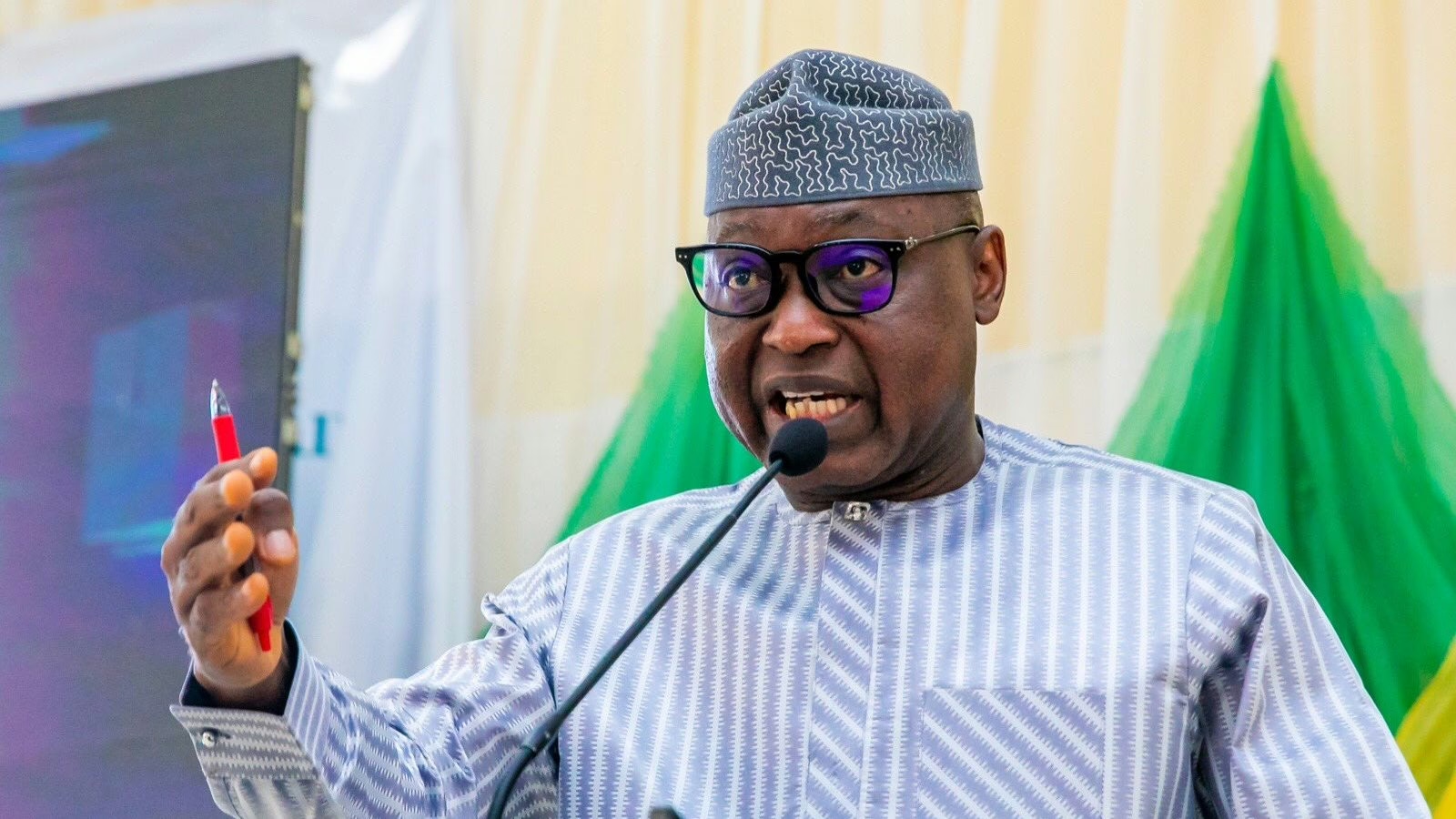
Governor Biodun Oyebanji of Ekiti State

Governor Biodun Oyebanji of Ekiti State. Photo credit: Official X handle of the governor | Source

Governor Oyebanji Appeals to Ekiti Citizens to Support President Tinubu Amid Infrastructure Concerns

In a recent statement, Ekiti State Governor Biodun Oyebanji addressed growing discontent among residents regarding the federal government’s role in the maintenance and development of critical infrastructure within the state. Specifically, he responded to criticisms linked to the deteriorating condition of the Ado-Aramoko-Itawure road, a vital artery for commerce and daily travel.

Clarifying Federal Government’s Commitment to Ekiti

Governor Oyebanji expressed his dissatisfaction with the prevailing narrative suggesting that the federal administration has neglected Ekiti State. He emphasized that such claims overlook ongoing efforts and commitments made by the central government to support the region’s development. The governor urged residents to adopt a more balanced perspective, highlighting that infrastructure projects often face delays due to multifaceted challenges beyond mere governmental will.

Contextualizing the Road Infrastructure Challenges

The Ado-Aramoko-Itawure road, a crucial link connecting several communities, has suffered from prolonged wear and tear, impacting transportation and economic activities. While the road’s condition has sparked frustration, Governor Oyebanji pointed out that similar infrastructure issues are prevalent across many Nigerian states, reflecting broader systemic challenges in road maintenance nationwide.

National Infrastructure Trends and Government Initiatives

According to the Nigerian Ministry of Works and Housing, over 40% of federal roads require urgent rehabilitation as of 2024, underscoring the scale of the infrastructure deficit. The federal government, under President Bola Tinubu’s administration, has launched several initiatives aimed at accelerating road repairs and enhancing connectivity, including the recently announced National Road Rehabilitation Program targeting over 10,000 kilometers of highways.

Encouraging Constructive Engagement and Patience

Governor Oyebanji called on Ekiti residents to channel their concerns through constructive dialogue and support ongoing government efforts rather than resorting to outright condemnation. He stressed that collaboration between state and federal authorities is essential to overcoming infrastructural hurdles and achieving sustainable development.

Looking Ahead: Prospects for Ekiti’s Development

With strategic partnerships and increased federal attention, Ekiti State is poised to benefit from upcoming infrastructure projects that will improve road networks and stimulate economic growth. Governor Oyebanji remains optimistic that with patience and unity, the state will witness significant progress in the near future.

Originally published on Premium Times Nigeria.

Continue Reading

Politics Today

Police Operatives Arrested for Brutally Assaulting Man Who Refused to Pay N1 Million Bribe

Published

on

Police officer in uniform from behind
Nigerian Police Officers

Escalating Incidents of Police Brutality in Nigeria Despite Reforms

Reports indicate a troubling increase in instances where Nigerian police officers have been implicated in violent behavior against citizens. This surge persists even as law enforcement agencies implement stricter disciplinary actions, including termination of officers found guilty of misconduct.

Recent Arrest Highlights Corruption and Abuse of Power

In a notable case, several police operatives were detained following allegations that they physically assaulted a man who declined to pay a bribe amounting to one million naira. This incident underscores ongoing challenges within the Nigerian police force regarding corruption and human rights violations.

Contextualizing Police Misconduct in Nigeria

Despite efforts such as the disbandment of notorious units like SARS and the introduction of community policing initiatives, reports from organizations like Amnesty International reveal that over 1,000 cases of police brutality were documented in Nigeria in the past year alone. These figures highlight the urgent need for comprehensive reforms and accountability mechanisms.

Moving Forward: Strengthening Accountability and Public Trust

To restore confidence in law enforcement, experts advocate for enhanced training focused on human rights, transparent investigation processes, and the establishment of independent oversight bodies. Drawing parallels, countries like South Africa have seen improvements in police-community relations after implementing similar reforms.

Source: Premium Times Nigeria

Continue Reading

Trending

Copyright © 2017 Zox News Theme. Theme by MVP Themes, powered by WordPress.